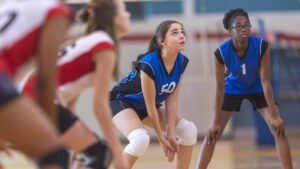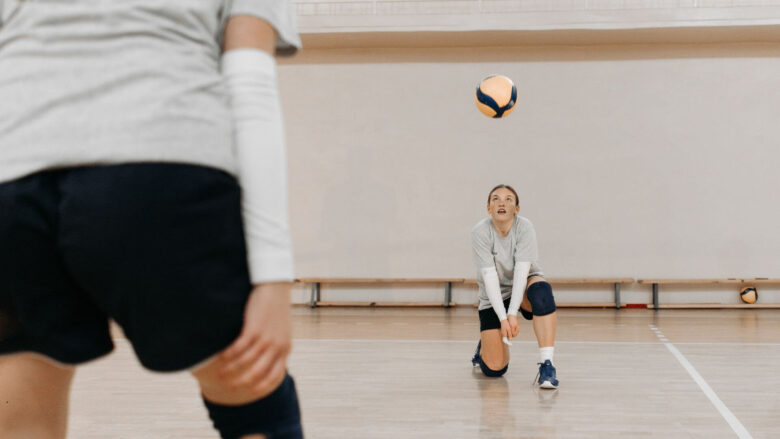
Passing is one of the most crucial skills in volleyball, serving as the foundation for every successful play. A well-executed first touch allows teams to transition seamlessly from defense to offense, setting up opportunities for powerful attacks and strategic plays. Without accurate passing, even the best hitters and setters struggle to execute effective plays, making passing an essential skill for all players.
Mastering the art of passing requires a combination of precision, control, and consistency. Whether you’re a beginner learning the fundamentals or an advanced player fine-tuning your technique, targeted passing drills can significantly improve your ability to read the game and react swiftly. Developing a reliable pass enables teams to maintain rhythm, avoid errors, and maximize scoring chances, making passing drills a crucial component of training.
This guide will walk you through some of the most effective volleyball passing drills designed to enhance accuracy, consistency, and control. By implementing these drills into your practice routine, you can refine your skills, build confidence, and contribute more effectively to your team’s overall performance.
Why Is Passing So Important in Volleyball?
Passing is the foundation of any successful volleyball game, serving as the first critical step in setting up an offensive play. A poor pass can throw off an entire sequence, making it difficult for the setter to deliver a clean set and for the hitter to execute an effective attack. Conversely, a well-placed pass provides the setter with multiple options, increasing the team’s chances of launching a powerful and strategic offensive move.
Beyond just offense, strong passing is essential for maintaining ball control and minimizing unforced errors. When players execute precise passes, they help keep the ball in play, reduce chaotic scrambles, and enable their team to transition smoothly between defense and attack. It ensures that teams maintain rhythm and avoid giving easy points to their opponents due to sloppy ball handling.
Additionally, passing fosters better teamwork and communication among players. Volleyball is a sport built on synergy, and successful passing keeps all team members engaged and in sync. By mastering passing techniques, players can enhance their game IQ, anticipate movements, and contribute more effectively to their team’s overall strategy.
- Sets up the offense – A good pass allows the setter to deliver a precise set to the hitter.
- Enhances ball control – Strong passing minimizes unforced errors.
- Improves teamwork – Good passing keeps all players in sync.
- Boosts defensive play – Efficient passing enables quick transitions from defense to attack.
Key Techniques for Perfecting Your Volleyball Pass
Before diving into drills, let’s review essential techniques for executing a successful pass. Developing a strong passing foundation requires a combination of proper body positioning, controlled arm movement, and precise ball contact. These fundamentals not only enhance accuracy but also improve reaction time and overall consistency on the court.
Understanding how to angle your platform, maintain balance, and follow through correctly can make a significant difference in your passing performance. Small adjustments, such as keeping a low and stable stance or ensuring smooth arm movement, can help players refine their technique and eliminate common mistakes. Practicing these elements diligently will lead to better control and more effective passes during games.
By mastering these key techniques, players will build confidence in their passing abilities, enabling them to support their team’s offensive and defensive plays efficiently. Whether you’re a beginner learning the basics or an advanced player fine-tuning your skills, focusing on these core techniques will set you up for success on the volleyball court.
1. Proper Stance
- Feet shoulder-width apart
- Knees slightly bent
- Weight on the balls of your feet
2. Platform Formation
- Extend your arms with hands together
- Keep elbows locked to create a firm platform
- Angle your arms based on where you want the ball to go
3. Contact Point
- Contact the ball with your forearms, not hands
- Aim for a controlled, steady pass rather than a hard rebound
4. Follow-Through
- Keep arms steady without swinging excessively
- Move your body toward the target rather than relying solely on arm movement
Best Volleyball Passing Drills
Now that we’ve covered the fundamentals, it’s time to put them into practice with targeted drills designed to sharpen your passing skills. These drills will help improve accuracy, consistency, and control, ensuring that your first touch sets up the play effectively. By incorporating a variety of exercises, you can develop muscle memory, refine your reaction time, and enhance your ability to adjust to different game situations.
1. Wall Passing Drill (Solo)
Objective: Improve ball control and consistency.
How to do it:
- Stand about 5-7 feet from a wall.
- Pass the ball against the wall, ensuring proper form.
- Maintain a steady rhythm, keeping your passes consistent.
- Challenge yourself by increasing speed or aiming for a specific target on the wall.
Benefits:
- Builds muscle memory
- Enhances reaction time
- Reinforces proper form
2. Partner Passing Drill
Objective: Develop accuracy and teamwork.
How to do it:
- Pair up with a teammate, standing about 10-15 feet apart.
- Pass the ball back and forth, focusing on controlled movements.
- Gradually increase the distance for a greater challenge.
- For added difficulty, include movement (e.g., side shuffling or backpedaling between passes).
Benefits:
- Encourages consistency
- Enhances court communication
- Improves ability to pass under pressure
3. Triangle Passing Drill
Objective: Improve directional control and communication.
How to do it:
- Form a triangle with two other players.
- Player 1 passes to Player 2, who then passes to Player 3.
- Continue rotating the ball in a triangle formation.
- Increase the difficulty by varying the pass height and speed.
Benefits:
- Strengthens court awareness
- Improves ability to adjust passing angles
- Builds endurance and reflexes
4. Shuffle Passing Drill
Objective: Enhance footwork while maintaining passing precision.
How to do it:
- Start at one end of the court with a partner or coach tossing balls.
- Side shuffle while passing the ball accurately back.
- Maintain steady control without breaking passing form.
- Repeat the drill in both directions.
Benefits:
- Boosts agility and movement
- Strengthens lateral quickness
- Reinforces controlled passing under movement
5. Overhead Passing Drill
Objective: Improve hand-eye coordination for overhead passes.
How to do it:
- Stand facing a partner or a wall.
- Pass the ball using overhead motion (setting position).
- Focus on precision and consistency.
- Gradually increase speed and repetitions.
Benefits:
- Improves high ball control
- Enhances setter-like passing skills
- Strengthens arm endurance
Common Passing Mistakes and How to Fix Them
Even experienced players can develop bad habits in passing, often due to repetitive motion errors, fatigue, or lack of attention to fundamental techniques. These mistakes can lead to inconsistent play, making it harder to maintain control during fast-paced matches. Recognizing these errors and addressing them with targeted corrections can significantly improve overall passing efficiency and accuracy.
One of the most common issues is overusing arm movement instead of utilizing the legs and core for stability. Players who swing their arms too much often struggle with precision, leading to erratic passes. Another frequent mistake is improper platform formation, where slight misalignments in the arms can cause the ball to veer off course. Additionally, mistimed contact with the ball—whether too high, too low, or off-center—can drastically reduce pass quality.
Here are some common passing mistakes along with their corrections to help refine your technique and ensure more consistent performance:
| Mistake | Cause | Fix |
|---|---|---|
| Swinging arms too much | Lack of stability | Keep arms steady and let the legs guide movement |
| Incorrect platform angle | Poor body positioning | Adjust arm angle to direct the pass |
| Contacting ball too high or low | Misjudged timing | Aim for consistent forearm contact |
| Stiff stance | Lack of mobility | Stay light on feet for quick reactions |
Final Tips for Becoming a Great Passer
- Repetition is key – The more you practice, the more natural passing will become.
- Stay relaxed – Tension in your arms can lead to inconsistent passes.
- Communicate with teammates – Call out plays to ensure smooth transitions.
- Watch professional players – Observe how top players position themselves and execute passes.
- Track your progress – Record practice sessions to identify areas for improvement.
Conclusion
Mastering volleyball passing is essential for players at all levels, as it directly impacts the efficiency of both offensive and defensive plays. A well-executed pass allows the setter to distribute the ball effectively, giving hitters the best chance to score. On the defensive side, strong passing ensures that teams can maintain possession and transition smoothly between phases of play. Without a reliable first touch, even the most talented teams will struggle to execute their strategies effectively.
By incorporating these drills into your routine, you’ll develop the muscle memory and technical skills necessary to deliver consistent, accurate passes. Repetition is key in refining your technique, as it strengthens reaction time, improves hand-eye coordination, and enhances overall control. Whether practicing individually or within a team setting, staying committed to regular passing drills will significantly elevate your performance on the court.
Whether practicing alone or with teammates, focusing on technique and consistency will make a noticeable difference in your skills. The best volleyball players continuously work on their fundamentals, never underestimating the importance of a clean first touch. By dedicating time to perfecting your passing abilities, you can become a more reliable and valuable asset to your team. Start training today, refine your technique, and take your passing game to the next level!
Explore More:
- Learn about the How to Improve Your Vertical Jump for Better Spikes & Blocks