In the fast-paced world of volleyball, where every serve and spike seems designed to dazzle, it’s easy to overlook the true game-changer: defense. While offense might ignite the scoreboard, it’s the quiet, tireless, and intelligent defense that wins championships. A team with a strong defensive core can neutralize the most powerful hitters, extend rallies, and force opponents into errors—turning every hard-fought dig or perfectly timed block into a shift in momentum.
Defense is more than just a reaction; it’s a deliberate strategy rooted in anticipation, positioning, communication, and relentless effort. Great defenders are not only physically quick but mentally sharp—they read the game like a chess master, interpreting subtle cues from setters and hitters to make split-second decisions. Defense requires discipline, cohesion, and trust among teammates, forming the invisible foundation upon which great volleyball is built.
Whether you’re a coach, a player, or a dedicated fan, understanding the best defensive strategies can transform how you view the game and how effectively you play it. This comprehensive guide explores the most effective defensive systems, position-specific responsibilities, and training methods to help your team become a defensive powerhouse.
Why Defense Is the Key to Winning Volleyball Matches
Good defense in volleyball does more than keep the ball off the floor—it changes the psychological landscape of the match. A well-executed defensive play, such as a diving save or a perfectly timed block, can instantly turn a point that seemed lost into a moment of triumph. These plays don’t just prevent opponents from scoring—they break their rhythm, cause frustration, and often force hitters to second-guess their next move.
Moreover, great defense fosters a sense of unity and resilience within a team. When players know their teammates will go all out to keep the ball alive, it builds trust and encourages a culture of effort and grit. Every dig, block, or coverage play reinforces a collective mindset that no point is ever truly out of reach. This cumulative effect can wear down even the strongest opponents over the course of a match and swing the momentum in your favor.
The Benefits of a Strong Defense:
- Neutralizes powerful offensive hitters.
- Builds confidence across the team.
- Provides a solid foundation for counterattacks.
- Enhances team communication and trust.
A good defense turns chaos into control, and desperation into opportunity.
The Two Pillars of Volleyball Defense
Volleyball defense consists of two major components: blocking and floor defense. These two elements work in unison to create a multi-layered safety net designed to either stop the attack at the net or control it after contact. Blocking is the proactive attempt to prevent the ball from crossing the net at all, while floor defense is reactive, focused on reading and recovering after the attack has bypassed the front line.
Together, these components require timing, court awareness, and team coordination. Successful defense relies not only on individual skill, but on players moving as a cohesive unit—adjusting their positions in real-time, responding to the opposing team’s formations, and executing quick transitions from one defensive phase to another. This layered approach is what allows teams to neutralize high-powered offenses and convert defensive stands into offensive opportunities.
1. Blocking: The First Line of Defense
Blocking occurs at the net and is usually executed by front-row players such as middle blockers, outside hitters, and right-side hitters. It serves as the first and most aggressive line of defense, intended to either shut down the opponent’s attack outright or deflect the ball into a position where the back row can respond effectively. A well-timed block can result in a point scored directly, commonly known as a “stuff block,” or redirect the ball to slow it down, creating a better opportunity for a successful dig.
Effective blocking requires much more than just jumping high—it involves reading the setter’s intentions, anticipating the hitter’s angles, coordinating footwork with fellow blockers, and executing a precise hand position that penetrates the plane of the net. The timing of the block must align with the hitter’s swing, and communication between blockers is essential to close seams and avoid gaps in the front line. Blocking also demands spatial awareness; blockers must constantly assess whether to commit to a single hitter or stay available to assist on a double or triple block. When executed correctly, blocking not only disrupts the opposing team’s rhythm but also energizes the defensive unit and shifts the psychological balance of the game.
Types of Blocking:
- Single Block – Used when timing or coverage is tight.
- Double Block – Most common, especially against outside or opposite hitters.
- Triple Block – Used against dominant attackers or predictable plays.
- Soft Block – Intentionally slows down the ball for easy digging.
Keys to Effective Blocking:
- Timing your jump based on the setter and hitter.
- Reading the opponent’s body language.
- Penetrating the net with strong hands.
- Communicating with fellow blockers to close seams.
2. Floor Defense: The Last Line of Defense
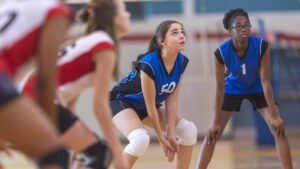
Floor defense is handled by the back-row players, primarily the libero and defensive specialists, who form the foundation of a team’s ability to keep the ball off the floor. Their job extends far beyond simply reacting to missed blocks—they are responsible for reading the trajectory and pace of the ball, predicting attack angles, and positioning themselves to cover every inch of the court.
The libero, typically the most agile and skilled defensive player, leads this unit, orchestrating floor coverage with constant communication and precise movement. Defensive specialists complement the libero by focusing on specific areas of the court, especially against tough servers and aggressive attackers.
These players must be adept at not just digging and receiving but also recognizing cues from the hitter, adjusting quickly to various offensive styles, and executing advanced techniques like rolling digs, collapse moves, and emergency pancakes. Floor defense requires a relentless mindset—every ball is playable, every point is winnable, and hustle is non-negotiable.
Key Techniques in Floor Defense:
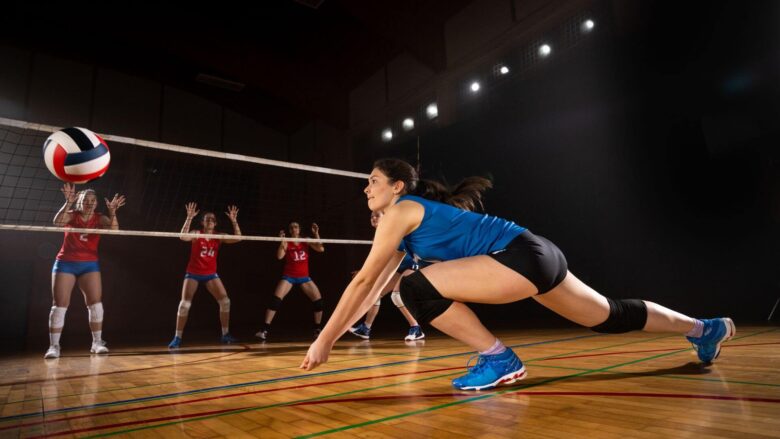
- Digging – Using forearms or hands to prevent the ball from touching the ground.
- Sprawling – Reaching out to make last-second saves.
- Pancake – A diving motion with a flat hand to keep the ball in play.
- Rolling and Sliding – Techniques to recover quickly after a defensive move.
Defensive Systems and Formations
Depending on your team’s strengths and the opponent’s attacking style, different systems can be employed to strengthen your defense.
Perimeter Defense
This classic system places defenders near the court’s outer boundaries, often aligning one player deep middle and the other two closer to each sideline. The primary goal is to defend against hard-driven attacks that are aimed toward the back corners or deep cross-court angles.
In a perimeter setup, the middle back player—often the libero—has full coverage responsibility for balls that travel over the block or get deflected. Wing defenders are responsible for their sideline and assisting in coverage around blocks. Front-row blockers are expected to funnel attacks into zones that the perimeter can protect effectively.
To make this system work well, it’s crucial that players maintain strong lateral movement, read the hitter’s arm swing accurately, and avoid collapsing too early on tips. Instead, the team must rely on solid communication to identify when adjustments are needed mid-play.
Best for: Power-hitting opponents
Pros:
- Strong coverage of deep corners.
- Effective against cross-court attacks.
Cons:
- Vulnerable to tips and short balls.
Rotation Defense
This system rotates players into positions based on anticipated attacks and the location of the opponent’s offensive strengths. The idea is to shift defenders slightly forward and inward, providing better coverage against tips and roll shots, which are often used to exploit traditional perimeter gaps.
In a rotation defense, players must move in harmony, often making small shifts in alignment right before or during the opposing team’s set. The middle back might shift to the left or right depending on the hitter’s tendencies, while the wing defenders close in slightly to protect seams.
One of the key challenges of this defense is maintaining awareness during these movements. Players must read the opponent in real time, communicate frequently, and avoid over-committing to a single play. This system favors athletic, fast-reacting defenders who are comfortable reading the court and adapting quickly.
Best for: Teams with quick-footed defenders
Pros:
- Covers more space dynamically.
- Good against mixed-pace offenses.
Cons:
- Can lead to confusion without strong communication.
Man-Up (Campfire) Defense
The Man-Up system, sometimes referred to humorously as the “Campfire Defense” (due to the circle of unguarded space it often leaves when misused), places one defender, typically the middle back or a defensive specialist, closer to the 3-meter line to defend against tips and short off-speed shots.
This setup is particularly effective against opponents who rely on finesse attacks rather than powerful hits. The advantage is in its ability to challenge dinks and cut shots before they land. It forces the defense to engage closer to the net, reducing reaction time but increasing the chance of preventing deceptive plays from scoring.
However, the system requires tight coordination. The back corners are left exposed, and defenders must be ready to sprint into position if a deep shot is made. This system rewards teams that have done thorough scouting and can predict when a tip is likely, using their positioning to counter the attack strategically.
Best for: Opponents who tip or roll shot frequently
Pros:
- Blocks soft attacks effectively.
Cons:
- Leaves the deep court more exposed.
Reading the Opponent: Anticipation and Reaction
Elite defenders don’t just react—they predict. The art of reading the opponent comes from a mix of observation, experience, and anticipation. Before the serve is even made, defenders should be evaluating patterns in the opponent’s setup, noting which hitters are front-row, how the setter positions their body, and even subtle cues like a hitter’s eye direction or footwork.
Anticipating where the ball will go gives defenders a split-second advantage—just enough time to move into position, adjust their stance, or call for help. Teams that excel in reading their opponents often appear to be one step ahead, digging attacks with calm precision and making the court feel much smaller to the opposing offense.
Building this skill requires film study, on-court repetitions, and constant verbal reinforcement between teammates. Even between points, defenders should be sharing insights: “Watch the outside, she’s tipping when off-balance,” or “Setter’s jumping on two when tight to the net.” This type of real-time analysis elevates a team’s collective IQ and gives them the edge in high-stakes matches.
Great defense starts before the ball is even hit. Reading the setter and attacker is a crucial skill that separates reactive teams from proactive ones.
What to Look For:
- The setter’s eyes and body orientation.
- The hitter’s approach and shoulder position.
- Trends in play direction throughout the match.
Tips:
- Watch videos of your opponents before matches.
- Use scouting reports to identify hitting tendencies.
Position-Specific Defensive Responsibilities
| Position | Defensive Duties |
|---|---|
| Libero | Primary digger and floor captain; leads communication |
| Middle Blocker | Blocks quick middle attacks and closes double blocks |
| Outside Hitter | Helps block, covers cross-court, and digs deep shots |
| Right Side Hitter | Blocks outside hitter and protects line shots |
| Defensive Specialist | Digs attacks in specific rotations; may sub in for servers |
Essential Defensive Drills
1. Digging Drills
Have hitters attack from different angles while back-row players dig repeatedly to improve reaction and technique.
2. Tip Coverage Drill
Simulate scenarios where blockers are beaten with tips. Players must sprint forward, call the ball, and dig cleanly.
3. Transition Drill
Work on switching from defense to offense quickly. Dig → Set → Hit with game-like tempo.
4. Communication Circles
Form a circle and pass a ball around while calling out each move to build communication habits.
Communication: The Unsung Hero of Defense
No defense can function without clear, concise, and constant communication. Talking before and during each play allows defenders to:
- Call the ball early.
- Alert teammates to coverage gaps.
- Shift based on opponent strategy.
Key Phrases to Use:
- “Mine!”
- “Short!”
- “Line!”
- “Deep!”
- “Free ball!”
Common Defensive Mistakes to Avoid
Even skilled players make errors. Awareness is key to reducing mistakes.
- Ball Watching: Not moving feet, just watching the play unfold.
- Poor Positioning: Standing too upright or out of zone.
- Overcommitting: Diving too early without proper read.
- Lack of Communication: Silent teams are vulnerable teams.
Final Thoughts: Make Defense Your Competitive Edge
While offensive plays may excite the crowd, it’s your defense that wins championships. A disciplined, well-structured, and vocal defense can shut down even the most powerful attackers.
By understanding systems, roles, communication, and drilling consistently, your team can create a wall that few offenses can break through.
Defense is more than a reaction—it’s a philosophy. Embrace it, master it, and use it to take control of every match you play.
Explore More:
- Learn about the Volleyball Passing Drills: How to Perfect Your First Touch