Footwork is the backbone of every volleyball play. While spikes, digs, and sets are the highlights fans remember, none of them happen without proper positioning—and positioning begins with how you move. Whether you’re playing defense, preparing for a jump serve, or transitioning from the back row to the net, quick and precise footwork allows you to be in the right place at the right time.
Yet footwork remains one of the most undertrained and overlooked skills in volleyball, especially among amateur players. Many athletes spend hours improving their vertical jump or their arm swing without realizing that poor movement technique could be holding them back. The truth is: your feet control the flow of the game.
In this comprehensive guide, we’ll explore why footwork is critical to volleyball success, break down the essential movement patterns for each position, and offer drills and pro tips to help you move faster and react quicker. Whether you’re just learning the game or looking to sharpen your competitive edge, this article is your step-by-step roadmap to better volleyball performance.
Why Footwork Matters in Volleyball
Footwork in volleyball is like the foundation of a house—often invisible, but crucial for everything built on top. When your feet move efficiently, your entire game benefits.
Key Benefits of Good Footwork:
- Faster Reactions: You’re able to get to the ball quicker, which is especially important for digs and serves.
- Improved Accuracy: Better positioning means better passes, sets, and spikes.
- Reduced Injuries: Efficient movement reduces strain on joints and prevents awkward landings or overreaching.
- Better Energy Management: Proper steps mean you move with purpose, avoiding wasted motion and fatigue.
In high-level volleyball, even a fraction of a second matters. Players who master their footwork get to the ball faster and with more control, setting themselves apart from the competition.
Key Components of Effective Volleyball Footwork
Good footwork isn’t just about speed. It’s about positioning, balance, and precision. Here’s a closer look at the basic techniques every player should master:
1. Ready Position
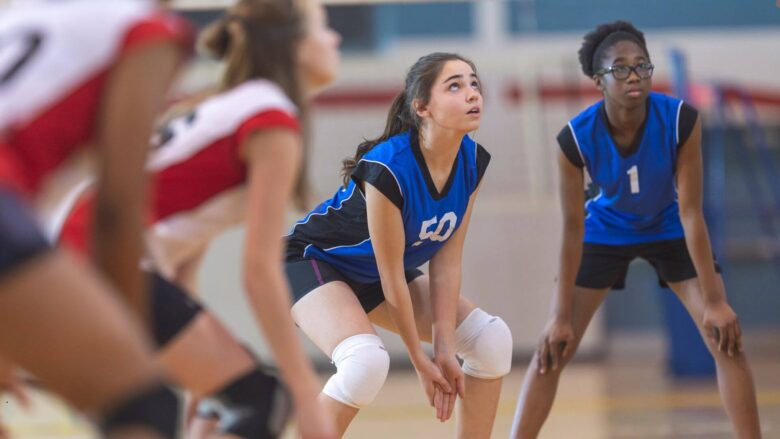
Before any movement happens, you must start in an athletic stance:
- Feet shoulder-width apart
- Knees bent
- Hips low
- Arms in front and relaxed
- Weight on the balls of your feet, not the heels
This position prepares you for explosive movement in any direction. Think of it as your launch pad.
2. Split Step
The split step is a quick hop or bounce that “activates” your body when an opponent is about to serve or attack.
- It keeps you light and reactive.
- Helps avoid flat-footed delays.
- Times your movement with the opponent’s contact on the ball.
3. Shuffle Steps
Used primarily for lateral movement:
- Keep feet close to the ground.
- Maintain shoulder and hip alignment.
- Avoid crossing your feet.
Shuffles are especially useful when tracking the ball side-to-side as a passer or defender.
4. Crossover Steps
These longer, more aggressive steps are used when you need to cover more ground quickly—such as moving from the middle to the sideline.
- Begin with a pivot.
- Cross one leg over the other while staying balanced.
- Used frequently by setters and middle blockers.
5. Drop Steps
Essential for retreating quickly without turning your back to the ball:
- Step backward at an angle while keeping your eyes forward.
- Useful for chasing down deep shots or covering tips over the block.
Footwork by Volleyball Position
Each position on the court has unique footwork needs. Understanding your role helps you tailor your movement patterns for maximum effectiveness.
Libero
- Heavy use of shuffle and split step.
- Quick lateral movements to read serves and dig spikes.
- Must stay low and ready at all times.
Setter
- Crossover and pivot footwork to move quickly into position.
- Precision is key—poor footwork leads to off-target sets.
- Must transition smoothly between defense and setting.
Outside Hitter
- Uses approach steps for attacking.
- Needs to track and adjust to the set.
- Also uses defensive shuffling when in back row.
Middle Blocker
- Uses shuffle steps to block from side to side.
- Requires quick lateral movement and explosive jumps.
- Must master footwork transitions between blocking and hitting.
Opposite Hitter
- Similar approach footwork to the outside hitter.
- Defensive movements on the right back when in rotation.
- Often uses a combination of crossovers and shuffles.
The Attack Approach: Timing and Execution
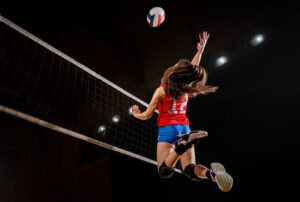
For hitters, the approach is the footwork sequence that leads to the jump and spike. Getting the timing right is essential for both power and control.
Standard Three-Step Approach (Right-Handed Hitter):
- Left Foot – Starts the motion, building momentum.
- Right Foot – Gets the body into position and adds speed.
- Left Foot (again) – Plants solidly and launches the jump.
For left-handed hitters, the sequence is reversed: right-left-right.
Four-Step Approach:
Some players prefer a four-step approach for smoother acceleration:
- Right
- Left
- Right
- Left (plant and jump)
Regardless of which one you use, the final two steps should be quick and explosive to generate vertical lift.
Drills to Improve Volleyball Footwork
Training your feet is as important as training your arms. Here are the most effective drills to develop faster, sharper movement:
1. Agility Ladder Drills
Use an agility ladder for rapid footwork patterns:
- High knees: Step into each rung with quick, high steps.
- Lateral shuffles: Move side-to-side through the ladder.
- Ickey shuffle: A pattern of in-out-in that challenges coordination.
2. Mirror Drill
- Stand across from a partner.
- One leads with random movements (left, right, forward, back).
- The other mirrors every move in real time.
This develops both reaction speed and agility under pressure.
3. Cone Box Drill
- Set up four cones in a square.
- Move in a clockwise or random pattern using different footwork:
- Shuffle between cones
- Sprint forward
- Backpedal
- Crossover
Simulates match-like movement in all directions.
4. Ball Toss Reaction Drill
- Coach tosses balls to various positions on the court.
- Player must read the movement and get to the ball quickly.
- Encourages anticipation and directional speed.
Plyometric Training for Explosive Movement
Plyometrics develop the explosive strength and speed needed for volleyball-specific movements. These exercises target fast-twitch muscle fibers, improving your first-step quickness and jump power.
Suggested Plyo Drills:
- Jump squats: Build leg strength and vertical lift.
- Skater hops: Develop lateral explosiveness and balance.
- Bounding: Forward leaps to build stride length.
- Tuck jumps: Improve reaction speed and coordination.
Incorporate 2–3 plyo sessions per week during preseason or training phases.
Pro Footwork Insights
Let’s take a look at advice from players and coaches who’ve competed at the highest level:
Karch Kiraly (USA Head Coach):
“You can’t execute world-class skills without world-class movement. Everything begins with your feet.”
Erik Shoji (USA Libero):
“Being light on your toes helps you stay ready for anything. It’s about reacting—not guessing.”
Jordan Larson (Olympic Champion):
“I work on my footwork just like I do my passing or hitting. Movement is a skill, and it needs practice.”
These insights show that even the pros train footwork deliberately. It’s not just background noise—it’s essential.
Common Footwork Mistakes to Watch Out For
Sometimes bad habits sneak in and hold you back. Be aware of these issues:
Mistake #1: Flat-footed stance
- Leads to delayed reactions.
- Solution: Practice staying on the balls of your feet in drills and warmups.
Mistake #2: Crossing feet while shuffling
- Causes imbalance and slows movement.
- Solution: Focus on smooth side-to-side shuffles during mirror drills.
Mistake #3: Overstriding on approach
- Reduces jump power and timing.
- Solution: Keep approach compact and explosive in last two steps.
Mistake #4: Standing tall when moving
- Hurts balance and agility.
- Solution: Keep knees bent and center of gravity low during movement.
Practice Smarter: How to Integrate Footwork Training
You don’t need to create separate workouts for footwork—just blend them into what you already do.
Smart Integration Ideas:
- Add a ladder drill to every warm-up.
- Use cones to guide movement during serve receive or setting drills.
- Record your movement and evaluate your stance, speed, and transitions.
- End each practice with quick reaction games to reinforce speed.
Choosing the Right Footwear
Great footwork is supported by the right shoes. Volleyball-specific shoes help prevent slipping, reduce fatigue, and offer stability for quick cuts.
Look for:
- Non-marking rubber soles for indoor grip.
- Lateral support for side-to-side motion.
- Lightweight materials for speed.
- Shock absorption for jumping and landing.
Top volleyball shoe brands include:
- ASICS Gel-Rocket
- Mizuno Wave Lightning
- Nike HyperAce
Final Thoughts: Step Into Your Best Game
Mastering volleyball footwork may not be as glamorous as nailing a perfect spike or a game-winning block, but it is the glue that holds your entire performance together. Every movement on the court begins with your feet. When they’re fast, smart, and purposeful, your whole game benefits—from your first touch to your final point.
Think of footwork as a long-term investment in your development as a player. The more you work on it, the more confident, controlled, and competitive you become. Whether you’re just starting out or fine-tuning your elite-level game, consistent focus on movement will make you a more complete athlete.
So stay low, stay quick, and keep moving—because the best players don’t just play harder, they move smarter.
References
- USA Volleyball Coaching Tips – https://usavolleyball.org/
- “The Importance of Footwork in Volleyball” – The Art of Coaching Volleyball
- Olympic Interviews with Jordan Larson and Erik Shoji – NBC Sports Coverage, Tokyo 2020
- Volleyball1on1.com Footwork Clinics
Explore More:
- Learn about the Attack Like a Pro: How to Spike with More Power & Precision